
Don’t criminalize, de-normalize
Reconciliation is work we need to do ourselves.

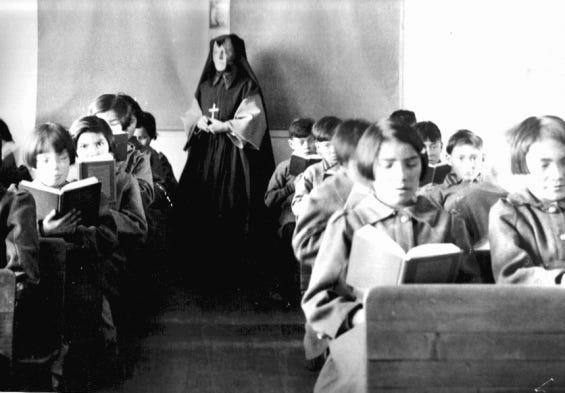
I do sympathize with people who say we need to stop tolerating residential school denialism. I agree with them. The same way I want us to stop tolerating Holocaust denial or intimate partner violence and any number of other ills. But we have a Charter of Rights and Freedoms for a reason. Also, barring two very well defined and narrow exceptions, regulating speech should not even be an option, because it generally leads to very dark and worse places.
First Nations Chiefs “passed an emergency resolution at the Assembly of First Nations meeting in Ottawa this week calling on the feds to criminalize residential school denialism as hate speech. Chief David Monias of Pimicikamak Cree Nation says the truth is not optional and that reconciliation cannot exist without it.”
No. That cannot be the case.
I understand the temptation to follow the example of the countries that have laws on the books making Holocaust denial punishable by law. This includes Canada. But let me ask you this: Have those laws contributed to less anti-Semitism, in your experience?
I didn’t think so.
Denying or minimizing the extraordinary and ongoing damage of the residential school system causes real harm to real people — in addition to the multigenerational trauma that results from over 150 years of systematic and systemic abuse at the hands of religious orders mandated by the government to “kill the Indian in the child.” I do not deny or minimize the added trauma of denialism, nor the racism inherently attached to the urge felt by some to engage in that denial. I have seen it with my own eyes and heard it with my own ears.
I still refuse to criminalize any speech except for libel (which is punished in civil courts) and incitement to violence against identifiable people or groups (example: “baby boys with blue eyes need to be flogged.”) In Canada we also have laws against hate speech and those have been fairly clearly narrowed and constricted by the Supreme Court.
Criminalizing other nasty things people say is not the solution. In fact, by driving nasty hate speech underground, it contributes to making the problem worse.
The solution, as always, lies with us. When you hear someone denying or minimizing the historical and/or ongoing harm of residential schools, speak up. Tell them they’re wrong. You may never change a bigot’s mind. But by standing up for the truth you will tell other people around you, who may hear the bigot’s words, that they are wrong. You will also give them courage to do the same and stand up to hate.
It’s slow and painful work. But if we want true and lasting reconciliation, we all need to do this work, not rely on the criminal code to do the job for us and rest in the illusion that the problem is solved because of a few words added to the law book.
Bien dit, bien argumenté. La démocratie ce n'est pas le confort et l'indifférence. C'est d'abord et avant tout la responsabilité de nous tous citoyens de participer aux débats, pas d'exiger que l'État prenne notre place et nous délivre de ce devoir en étouffant certains débats inconfortables et exigeants. La démocratie est fondée sur le débat, donc sur la liberté de dire, de contredire, de convraincre. Interdire ne convainc personne.