
A life’s worth
We cannot, must not, value some lives less than others.

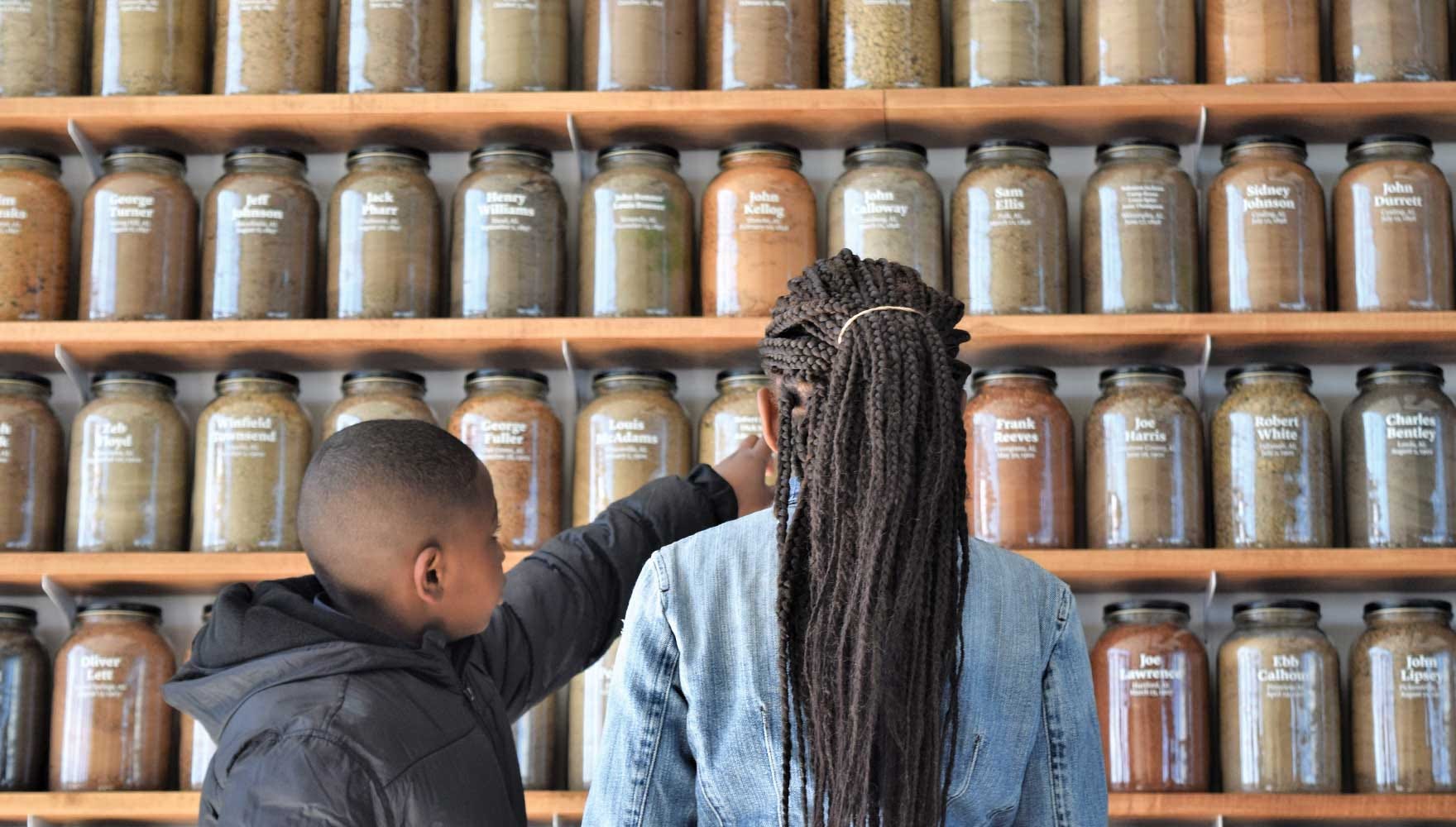
I had already been at the Legacy Museum in Montgomery for 90 minutes, going slowly through the exhibits and doing my best to absorb the enormity of the human lessons this powerful site contains without breaking down in tears every five minutes, when I came upon the wall of jars.
The Museum asks visitors to refrain from taking pictures, which is why I am using one from its website. I insist on showing you the rows of what looks like giant Mason jars, each filled with dirt of various textures and colours, each with a name, a location and a date in white letters.
It’s actually two walls — there are two sides of it, running the entire length of the room. There’s 800 jars in total. Clean glass, pristine lids, neatly arranged in impeccable order. Each filled with soil collected at the site of lynchings. Each representing one human dying in front of a crowd, dangling helplessly from a noose.
I wanted to look at each one individually. Which, I realize, means nothing. I wanted to bear witness, but what’s one white person’s two-second gaze going to do to a jar of dirt? Nothing. I did it anyway. Because I couldn’t not.
Near the wall of jars, as part of the larger exhibit on lynching, there is information about who the victims were and the reasons given for their horrifying deaths. I read those, too. They were so… trivial. I knew about the horrors of lynching, of course. But up until that wall of jars I hadn’t realized just how flimsy and transparently evil the pretexts were for brutally killing black people as though their basic rights as human beings — indeed, their very lives — didn’t matter.
Here is a sample.
Grant Cole was lynched in Montgomery, Alabama, in 1925 after he refused to run an errand for a white woman.
Lacy Mitchell was lynched in Thomasville, Georgia, in 1930 for testifying against a white man accused of raping a black woman.
Elizabeth Lawrence was lynched in Birmingham, Alabama, in 1933 for reprimanding white children who threw rocks at her.
William Wardley was lynched in Irondale, Alabama, in 1896 because local white merchants wrongly thought his money was counterfeit.
Jesse Thornton was lynched in Luverne, Alabama, in 1940 for addressing a white police officer without the title “mister.”
The staff at the Legacy Museum is extraordinary. Very gentle and patient, offering many opportunities to rest and reflect, and every single one of them who interacted with me thanked me for being there. For wanting to know.
I found myself thinking back on that November visit in Montgomery when I was viewing the videos that showed the death of Renee Good in Minneapolis, who was shot in the head three times at point blank range by an ICE agent. This video, especially:
(Story with quotes, for those who don’t want to watch.)
Pay attention to the words the agent is heard saying AFTER she’s shot dead. (At the time of writing it’s not clear if the voice is that of the agent who shot her or his nearby colleague; I don’t think this detail matters.)
“Fucking bitch.”
The ongoing brutality of the ICE raids is not the same as the horrors of lynching. You can’t compare these things. But you can — and should — note that every single time one group of humans oppresses another, they deny their humanity. This is true of the Holocaust, of slavery, of lynchings, of the Rwandan genocide, and of every other example of oppression — big or small — you care to mention.
I never bought the transparently self-serving and reality-denying excuse that the ICE agent who shot Renee Good three times in the face, did so in self-defence. Even if he did fear she might hit him with her car. You don’t shoot a woman who presents as harmlessly as she did in that video and call her a fucking bitch because you’re scared. You do that because you have ceased to see her as a fellow human.
I don’t know how we come back from this, how we fix this mess. But I do know we absolutely cannot begin to heal until everyone’s life is valued just as much as anyone else’s.