
A Joyal nomination
It's rare that I write articles that are 100% positive. This is one worthy exception.

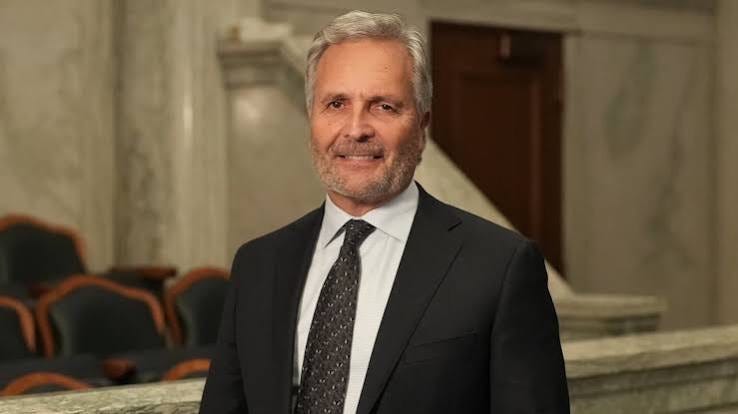
Prime Minister Mark Carney this morning announced the nomination of Glenn Joyal as the newest justice on the Supreme Court. This is great news for many reasons.
The first one is that the nomination process is working as intended. In Canada we appoint justices to the highest bench after an independent board makes recommendations to the prime minister based on merit. The PM picks from that short list. It works well because the process is rigorously focused on what the Court needs and what the applicants bring.
In this case, the Court needed a justice from Western or Northern Canada (this nomination is to replace Justice Sheilah Martin, of Alberta), and functionally bilingual. We could hardly do better than picking Justice Joyal, who has served as Chief Justice of the Manitoba Court of King’s Bench since 2011.
And served well, as you can see if you read his biography and answers to the questionnaire, both of which are public. As will be the special question and answer session with the nominee and members of the House of Commons Standing Committee on Justice and Human Rights and of the Standing Senate Committee on Legal and Constitutional Affairs. You can watch the Q&A session with Justice Mary Moreau, nominated in 2023, on CPAC.
The questionnaire is especially interesting near the end, and if you’re a keen student of the Court I invite you to grab a chair and a cup of coffee and read the entire thing. For those of you content to get the Coles Notes, here they are:
He has deep Franco-Manitoban roots; his paternal ancestors include Louis Riel’s maternal grandmother, Marie Anne Gaboury. His mother is Polish. He is also fluent in Italian.
He is a published playwright, including the 2005 Les lions et leurs ponts, a play about identity and survival.
He is an expert in constitutional and criminal law with notable contributions to Indigenous rights, in good part from his establishment of a Trust, Reconciliation and Access to Justice Committee to educate judges about Indigenous culture, legal traditions, customs and lived experiences.
He lists as his most significant judicial matters the child protection reform, shifting it away from an adversarial model and lowering the number of trials to about a dozen a year. That model was later adopted by New Brunswick.
He has taken the Jordan ruling seriously and restructured criminal scheduling to keep cases closer to 10-12 months, which is well under the ruling’s 30-month time limit.
He acquitted the wrongfully convicted Pinaymootang men who were arrested and convicted of the 1973 beating and stabbing death of Ting Fong Chan in Winnipeg and forced by police to sign false confessions. Nobody believed their pleas of innocence and they were sent to jail by an all-white jury and spent years behind bars for a crime they did not commit.
On the role of judges in our constitutional democracy, he says what’s even more important than adjudicating cases is to maintain the conditions for legitimate adjudication, including the independence of the judiciary, impartiality and public confidence.
I remember him as the judge who presided over a case during the COVID pandemic where a few churches claimed public-health restrictions were unconstitutional. The outfit representing the churches, the Justice Centre for Constitutional Freedoms, hired a private detective to follow Joyal around (including at his home and cottage) to see if he was himself respecting public health rules. This resulted in disciplinary proceedings against the lawyers from the JCCF.
It’s rare that I write pieces that are 100% one-sided but this is an exception well worth making. Justice Joyal is an excellent choice for the Supreme Court of Canada.